
Why Businesses Need Legacy Modernization
Businesses need legacy system modernization to keep up with changing market demands, enhance operational efficiency, and reduce high maintenance costs. Outdated software often suffers from compatibility issues with modern tools, leading to frequent system crashes and workflow delays. Modernizing legacy applications enables seamless integration with cloud services, mobile platforms, and third-party APIs. It also drastically lowers security risks associated with unpatched software vulnerabilities. Overall, upgrading legacy systems is essential for staying competitive and delivering smooth customer experiences.
Essential Steps for Modernization
There are several key steps that organizations should follow when upgrading their legacy software systems. Conducting a thorough system audit helps identify code bottlenecks, technical debt, and operational risks. Choosing the right modernization approach—such as rehosting, refactoring, or complete re-architecture—ensures a cost-effective transition. Implementing robust data migration pipelines protects valuable business information during the upgrade process. Testing the updated applications extensively minimizes potential downtime and operational disruptions. Additionally, training employees on the new software interface ensures quick adoption across departments.
Key Benefits
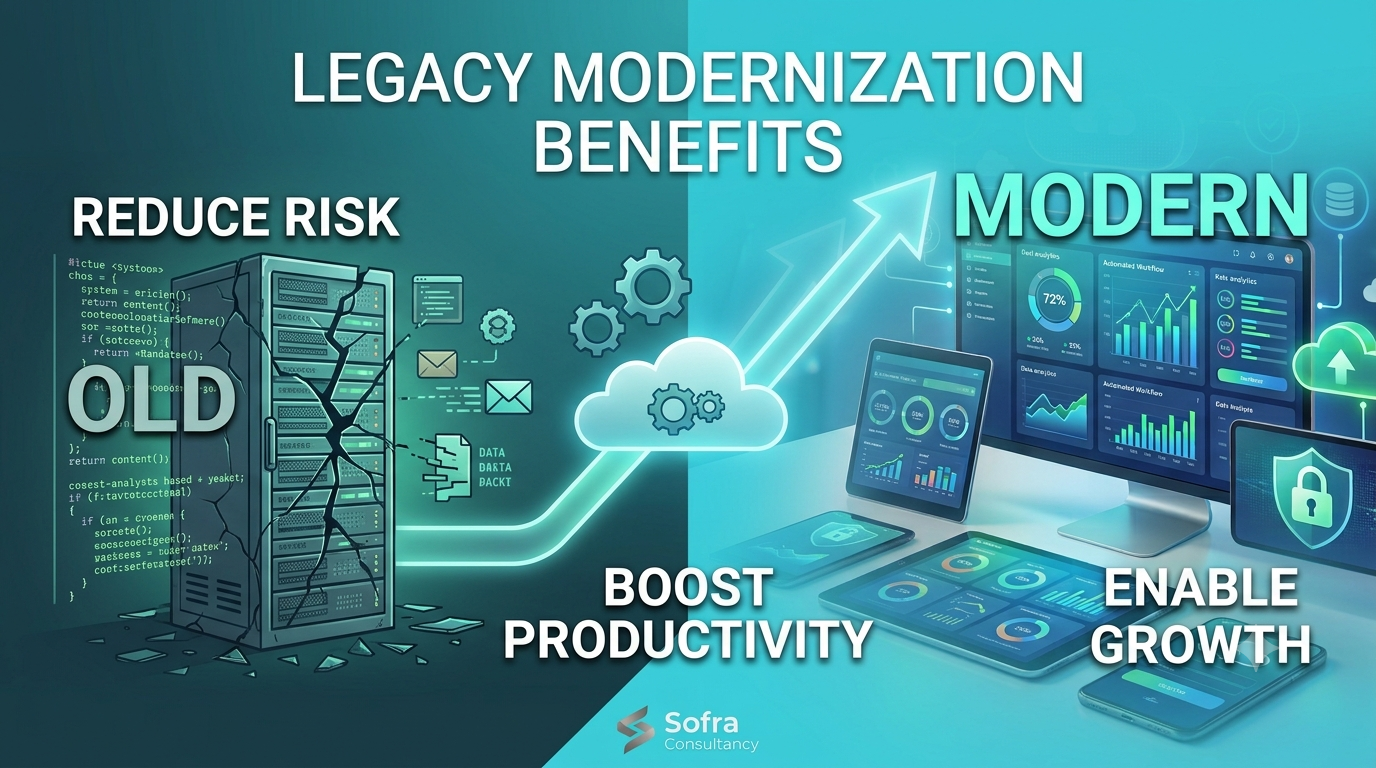
Legacy system modernization offers numerous benefits, including faster performance, higher software reliability, and robust data protection. It reduces long-term maintenance costs while improving overall team productivity and system uptime. Modern software architecture allows businesses to adopt emerging technologies like automated workflows and real-time analytics. Upgraded platforms also deliver intuitive user experiences that boost customer satisfaction and retention. Overall, modernizing old software empowers companies to drive sustainable innovation and scale with confidence.
Frequently Asked Questions
What is legacy system modernization?
Legacy system modernization is the process of updating, re-architecting, or migrating outdated business software to modern tech stacks to improve performance, security, and scalability.
How do I know if my business software needs an upgrade?
Signs include frequent system crashes, high maintenance costs, lack of integration with modern tools, poor user interface, and slow performance.
Does modernizing old software disrupt daily business operations?
When executed through a phased modernization plan with thorough testing, operational downtime and risk can be kept to a minimum.